
Inside the $25.5 Million Week: When Powerball Finally Broke

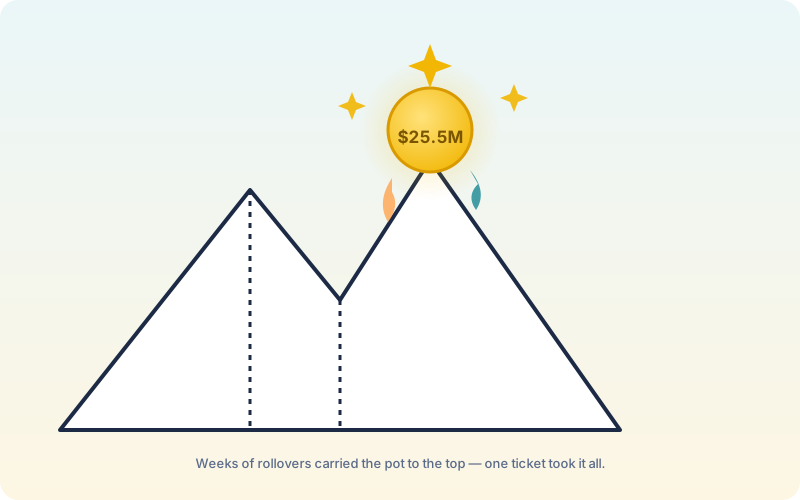
I remember refreshing the NZ Lotteries page on Saturday night and actually saying "blimey" out loud when the numbers locked in. Twenty-five and a half million dollars—solid, confirmed, heading to one solitary ticket holder in Tauranga. After weeks of watching that Powerball ladder inch upward, starting from the $23 million mark and climbing through the rollover weeks, we finally had a winner. It was the biggest prize we'd seen in 2026, and honestly, it felt like the whole country had been holding its breath.
The Slow Climb to $25.5 Million
There's something hypnotic about a rollover streak. When the jackpot sat at $23 million and nobody hit the big one, you could feel the tension building—not because the odds changed (they stayed exactly the same), but because the story got bigger. Each week that Powerball wasn't struck, the pot grew, dragging more people into the fray who maybe don't usually buy tickets. By the time we hit that $25.5 million figure on March 28th, ticket sales had more than doubled compared to a standard week.
I always remind everyone that every draw is completely random—no pattern, no system, no special day of the week changes your chances. The balls don't know they're worth more. But psychologically? That climbing number is impossible to ignore. It's like watching a thermometer on a hot day; even though you know the temperature doesn't make the heat any more likely, you check it constantly.
The Single Ticket Factor
What struck me most about this win wasn't just the size—it was the solitude. One ticket. One person. In a year where we've seen several big prizes split three or four ways, there's something almost shocking about a solo claim. Statistically, when jackpots balloon like this, ticket volume increases so dramatically that multiple winners become more likely just through the sheer volume of combinations in play.
But probability is quirky. That Tauranga ticket held the only matching line for both the Lotto numbers and the Powerball. No syndicate to divide the spoils, no awkward conversations about who put in what. Just one person suddenly navigating a $25.5 million fortune. I find myself wondering about their Saturday evening—whether they checked the ticket before bed or waited until Sunday morning with a cup of tea, completely unaware their life had already changed.
When Fever Hits
Jackpot weeks like this one fascinate me because they reveal how we actually think about chance versus how we talk about it. My site traffic tripled during those rollover weeks. People weren't looking for "systems"—most know better—they were looking for stories, for the entertainment of imagining "what if." That's the honest truth of it: Lotto is entertainment. Play within your budget, treat it like a movie ticket that might pay for itself, and enjoy the daydream.
The queues at retail outlets stretched out the door on that final Saturday. The online system groaned under the weight of last-minute entries. Everyone understood the math—that one in 38 million chance doesn't improve no matter how many tickets you buy—but the collective experience of participating in something massive has its own value. We weren't just buying lines; we were buying permission to fantasize about mortgage-free Mondays and helping the whānau.
For three weeks, we'd watched that number grow, creating a shared national narrative. Then, with six little balls and one Powerball, it ended. The board reset. The winner begins their new life, and the rest of us quietly fold our unscanned tickets into recycling, maybe smiling at the harmless fun of it all.
Fancy your own set of numbers?
I'll pick 30 fresh lines for the next draw — hot, balanced and wild card.