
Why So Many Kiwis Keep Lotto Tickets in Cars, Wallets and Drawers

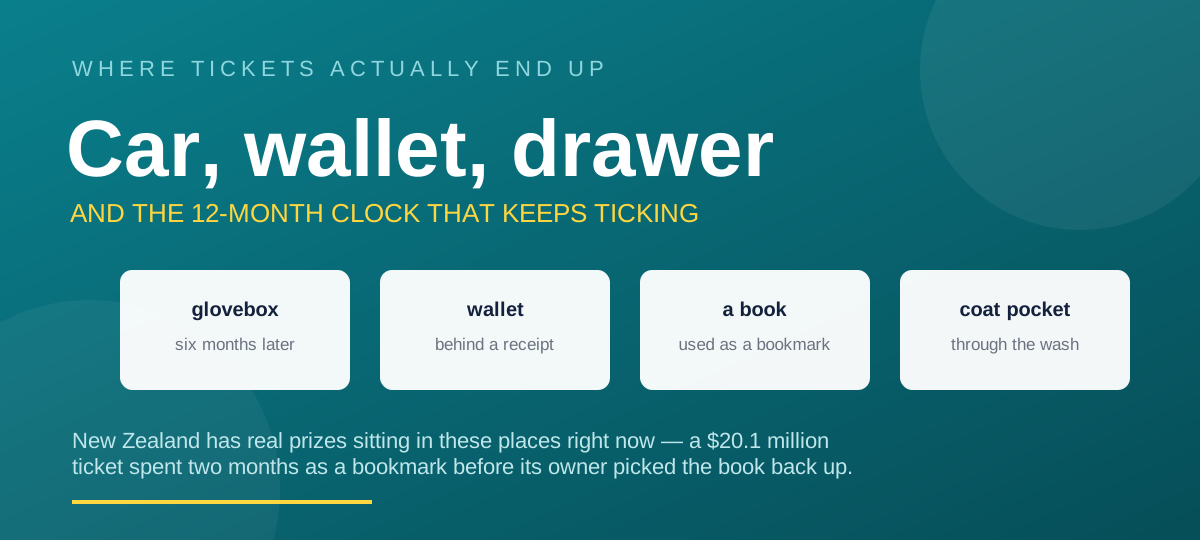
Kia ora! I have a small confession that I suspect is not unique to me: there is a ticket in my car. I know roughly when I bought it. I am fairly confident it is not a winner. I have not checked it.
The interesting thing is not the ticket. It is the fact that this is normal in New Zealand — which is why "check your ticket" is a genuine public service campaign here and not just a marketing line.
It is not laziness, it is design
A Lotto ticket is built to be forgotten. Look at how it arrives:
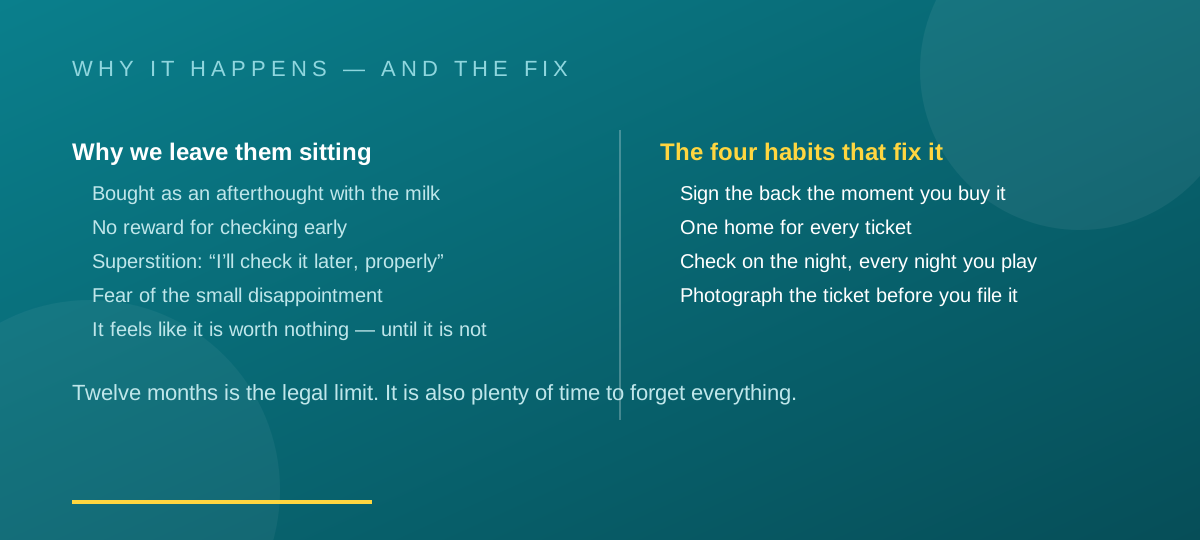
- It is bought in the middle of something else. Nobody drives to the dairy for a ticket. It is bought with milk, with petrol, on the way to work. There is no ceremony, so there is no memory anchor.
- There is nothing to do next. The ticket has no task attached for days. Nothing bad happens if you leave it in your glovebox. Nothing good happens if you check early, either — the draw has not even happened yet.
- Checking carries a tiny emotional cost. For most tickets, the result is nothing. Not a loss you register, just a small nothing. People delay that on purpose, and "I'll check them all at once, properly" is a very easy sentence to believe.
- The ticket looks worthless. It is a scrap of paper in a wallet full of scraps. Until the moment it is not — and that moment is the only one that matters.
Once you see those four things together, the pile in the drawer makes perfect sense. It is the path of least effort at every single step.
What is actually sitting out there
This is not a theoretical problem in New Zealand. Real money has genuinely been left sitting:
- A $20.1 million Powerball ticket looking for its owner. It turned up eventually — inside a book, after nearly two months working as a bookmark. The winner put it straight into his wallet and checked it at a shop, where the machine flashed major prize.
- A $333,333 ticket sold at Four Square St Heliers for the 27 June draw, which Lotto NZ was still trying to reunite with its owner into September. Their Head of Corporate Communications had a line for it that says everything: "maybe have a scan of your bookshelf."
- The general pool of unclaimed prizes, which is permanent enough that I wrote a whole piece on where that money actually goes. Short version: it returns to players and community funding, and the winner never sees it.
Somewhere in that group are people who checked eventually, and people who did not check within twelve months and lost a prize outright. The second group is the one worth avoiding.
The four habits that fix it
I have been testing this on myself for a while, and these are the only habits that actually stuck. All four are free and take seconds.
1. One home for every ticket. Not "the wallet" — wallets change. A single spot: a specific pocket of a specific bag, or a clip in the car, or a note in your phone case. The rule is that a ticket is never temporarily anywhere else.
2. Sign the back the moment you buy it. This is Lotto NZ's own advice, and it does two things: it starts the claim process properly for bigger prizes, and it stops the ticket from being a blank bearer item that anyone could claim if you lose it. It also makes it feel like a document rather than a receipt, which changes how you treat it.
3. Check on draw night, not when you remember. The draw is at 8pm Wednesday and Saturday, and results are live on MyLotto within minutes. If you bought paper and you were near a store that evening anyway, check it then — while the draw is still the thing you are thinking about. If not, check it the next morning on the official results and confirm on your ticket.
4. Photograph the ticket before you file it. A photo in your camera roll, with the draw number visible, is your backup if the paper goes through the wash. Two warnings that matter: never post the photo publicly (a photograph of an unclaimed winning ticket is a target, not a souvenir), and remember that a photo cannot be claimed — only the ticket can.
If you have a pile of old tickets and no idea what any of them are, that is the case my Almost Millionaire checklist was written for. It is not about imagining a win; it is about checking safely and knowing when you are being scammed.
The honest bit
You are probably not sitting on a fortune. The overwhelming majority of unchecked tickets are worth nothing at all, and I am not going to pretend otherwise, because that is not how the maths works.
But the cost of checking is about ninety seconds, and it happens on a Wednesday or Saturday you were going to think about the draw anyway. Twelve months is the limit. That is a long time to forget something worth millions, and it is not a long time at all once you have forgotten it.
Check the ticket in your car. Even if it is nothing — especially if it is nothing, because then you can stop thinking about it.
If gambling has stopped being entertainment for you or someone close to you, Gambling Helpline NZ is free, confidential, and available 24/7 on 0800 654 655.

Fancy your own set of numbers?
I'll pick 30 fresh lines for the next draw — hot, balanced and wild card.