
Who Owns a Lotto Prize When the Ticket Was a Gift?

Kia ora! This question comes up every single time a big prize goes unclaimed, and it always arrives in the same shape: "I bought the ticket for my dad." "It was our office pool." "My partner paid but I picked the numbers."
So let me answer it properly, starting with the part that surprises people.
The rule that decides it
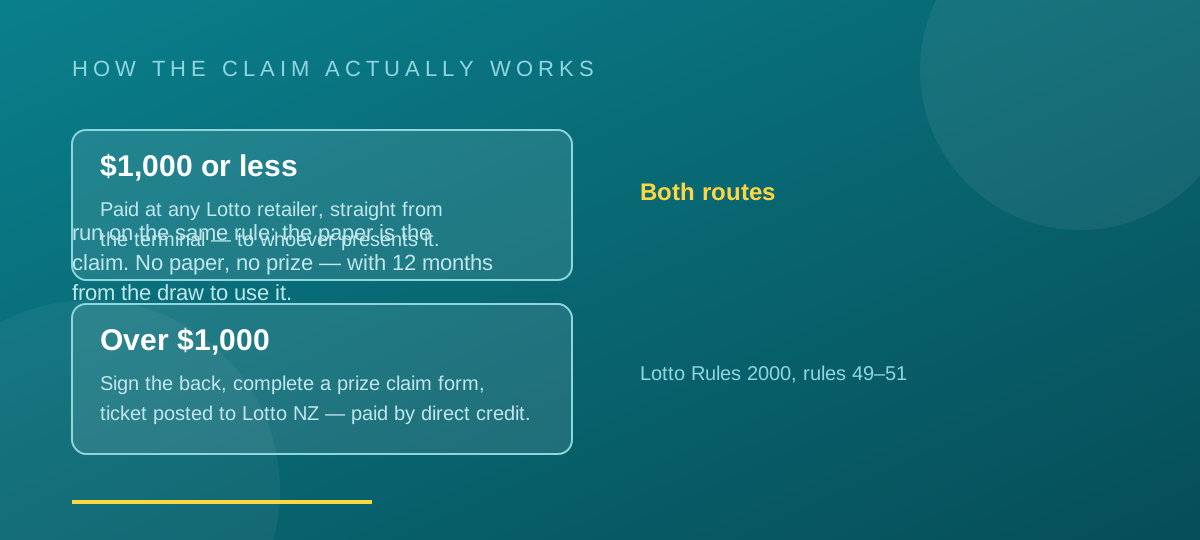
New Zealand lotteries run under the Lotto Rules 2000, and the relevant part is refreshingly blunt. Rule 50 says a retailer must pay the bearer of a ticket winning $1,000 or less. Rule 51 says a claim for more than $1,000 is made by the person who presents the ticket, signs the back of it and completes a prize claim form.
In plain English: the prize follows the paper, not the wallet that paid for it.
Lotto NZ does not ask who funded the ticket. It pays the person who turns up holding it. That is not a loophole — it is the only workable system for a lottery sold mostly in cash, over counters, to people buying milk at the same time.
What that means in practice
A gift ticket. If you buy a ticket, hand it over and say "this is yours", the prize is that person's. If you buy it, keep it in your wallet and intend to give it later, it is still yours — because you are still the bearer. The moment it changes hands is the moment the ownership changes, even if nobody thinks of it that way at the time.
An office pool. This is where the paperwork actually matters. Every pool has one person who buys the tickets. Under the rules, that person is the bearer, which means Lotto NZ will pay them — and only them. If the pool wins $8 million, the Commission's job ends when it pays the person holding the ticket. Splitting it correctly afterwards is entirely the pool's problem.
Which is why the good pools do three cheap things: they write down who is in for which draw and how much they paid, they photograph the tickets and share that photo in the group chat, and they keep the message thread. That single photo has ended more arguments than any lawyer. If you want the mechanics of running one properly, I wrote a whole guide on Lotto syndicates in NZ.
Couples and families. There is no special rule for partners or relatives. No rule about joint accounts, no rule about who picked the numbers, no rule about who buys "their" ticket each week. Whoever holds the paper claims it. Plenty of couples have played together for twenty years and never once discussed this, which is fine right up until the week it is not.
The uncomfortable bit
Lotto NZ is not a referee. It cannot be. It has no way to know whether the $50 that bought the ticket came from you, your flatmate, or the office tea fund. So the moment money is on the table, the only thing that counts is possession — and any argument after that is a civil dispute between two private people.
Two practical consequences worth saying out loud:
- A lost ticket is a lost prize, and legally it belongs to whoever finds it. Our guide on what happens if you lose a Lotto ticket covers the few things you can do, all of which work better before the fact than after.
- A ticket that expires unclaimed does not go to the intended recipient. After 12 months it is gone from the pool of claimable prizes entirely — here is where that money actually goes.
If you are gifting a ticket
Gift tickets are one of the nicest things in the game, so here is how to keep them uncomplicated:
- Decide in advance who owns it. If it is a gift, say so when you hand it over. If it is a loan of your ticket, say that instead.
- Hand over the actual ticket. Intent is lovely; possession is what pays.
- Write your name on the back only if you are the claimant. That signature is the claim mechanism for prizes over $1,000 — it is not a "this is mine" label you should add before deciding.
- Keep the receipt-style record. Lotto NZ does not offer a record of who bought a retail ticket, so your own photo and note is the only record that will exist.
The tax question, quickly
Prizes in New Zealand are paid tax-free as a lump sum — that is true from Division 7 up to the Powerball jackpot, and it is one of the better parts of the NZ system. There is also no gift duty here (it was abolished in 2011), so sharing the money out afterwards does not create a tax bill.
What gifting can affect is your entitlement to support: large gifts and lump sums are treated as assets or income in some Work and Income calculations. I went through the official position in do Lotto winnings affect benefits in NZ if that is your situation.
The short version
- The prize goes to whoever holds the ticket, because that is what the Lotto Rules say.
- Lotto NZ pays one claimant and leaves the rest to the people involved.
- A written record, a photo and one clear conversation in advance is worth more than any dispute afterwards.
The odds do not care who paid. Neither, unfortunately, does the paperwork.
If gambling has stopped being entertainment for you or someone close to you, Gambling Helpline NZ is free, confidential, and available 24/7 on 0800 654 655.
Quick answers
If I buy a Lotto ticket as a gift, who owns the prize?
Legally, whoever holds the ticket. New Zealand's Lotto Rules say a retailer must pay the bearer of a ticket worth $1,000 or less, and larger claims are made by the person who presents and signs the ticket. Lotto NZ does not investigate who paid for it, so a gift ticket's prize belongs to the person holding it.
Does the person who paid have any claim?
Not through Lotto NZ. The Commission pays the claimant who presents the ticket, and any dispute about who really owns the money is a private matter between the people involved — not something the lottery can or will resolve.
How should an office pool protect itself?
Keep a written record: the date of each entry, who paid, how much, the lines played, and a photo of the ticket. Lotto NZ pays the individual who presents the ticket, so the pool needs its own paperwork to divide the money afterwards.
What if the ticket is lost before anyone claims it?
A retail ticket is a bearer item, so a lost ticket is effectively whoever finds it. That is the strongest argument for signing the back and keeping one copy of every ticket you are part of.
Is a gifted prize taxed in New Zealand?
No. Lotto prizes are tax-free and there has been no gift duty in New Zealand since 2011, so passing money to family afterwards is not taxed. Gifting can still affect benefit or subsidy entitlements, which is worth checking before you hand out large amounts.
Should a couple put anything in writing?
It is not legally required, but a short note of who bought which entry, saved with a photo of the ticket, removes any argument later. Couples who play from a joint account and both keep tickets are the case where a written record helps most.

Fancy your own set of numbers?
I'll pick 30 fresh lines for the next draw — hot, balanced and wild card.